

Everything you need to know about swollen, unsightly veins and their treatment
What these veins are
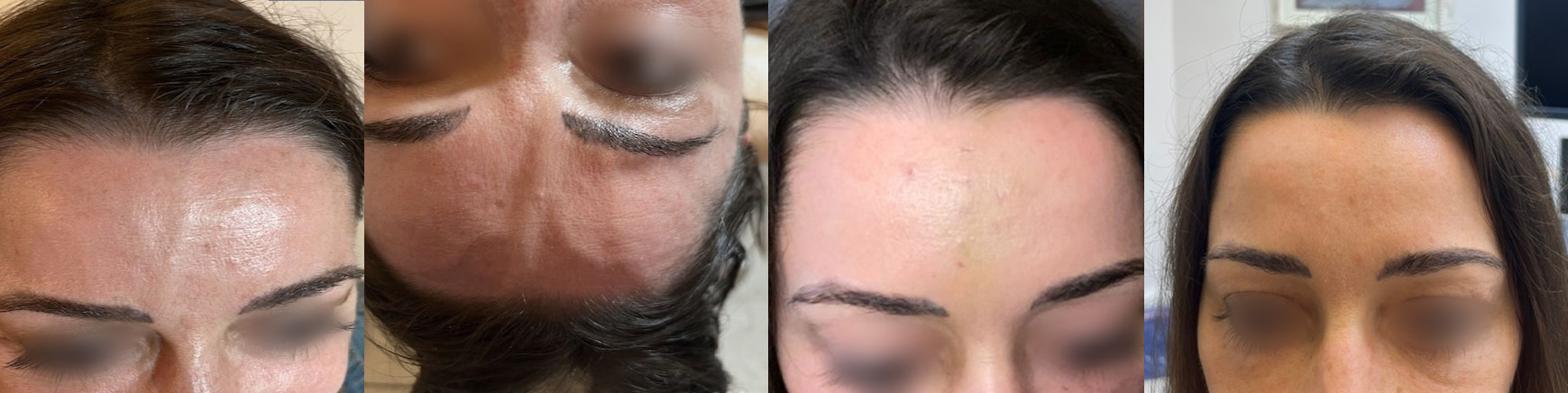
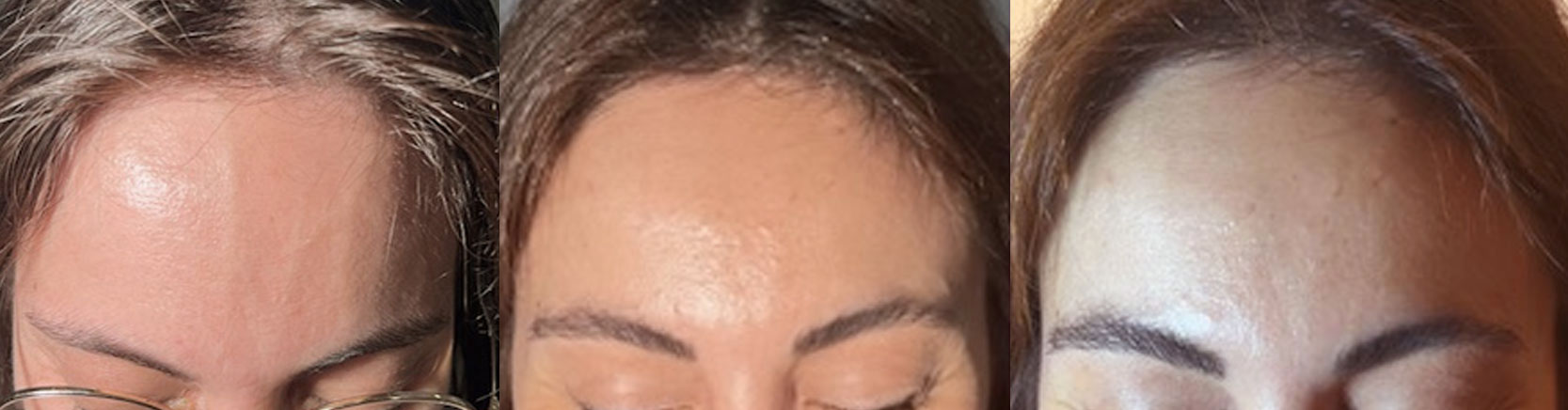
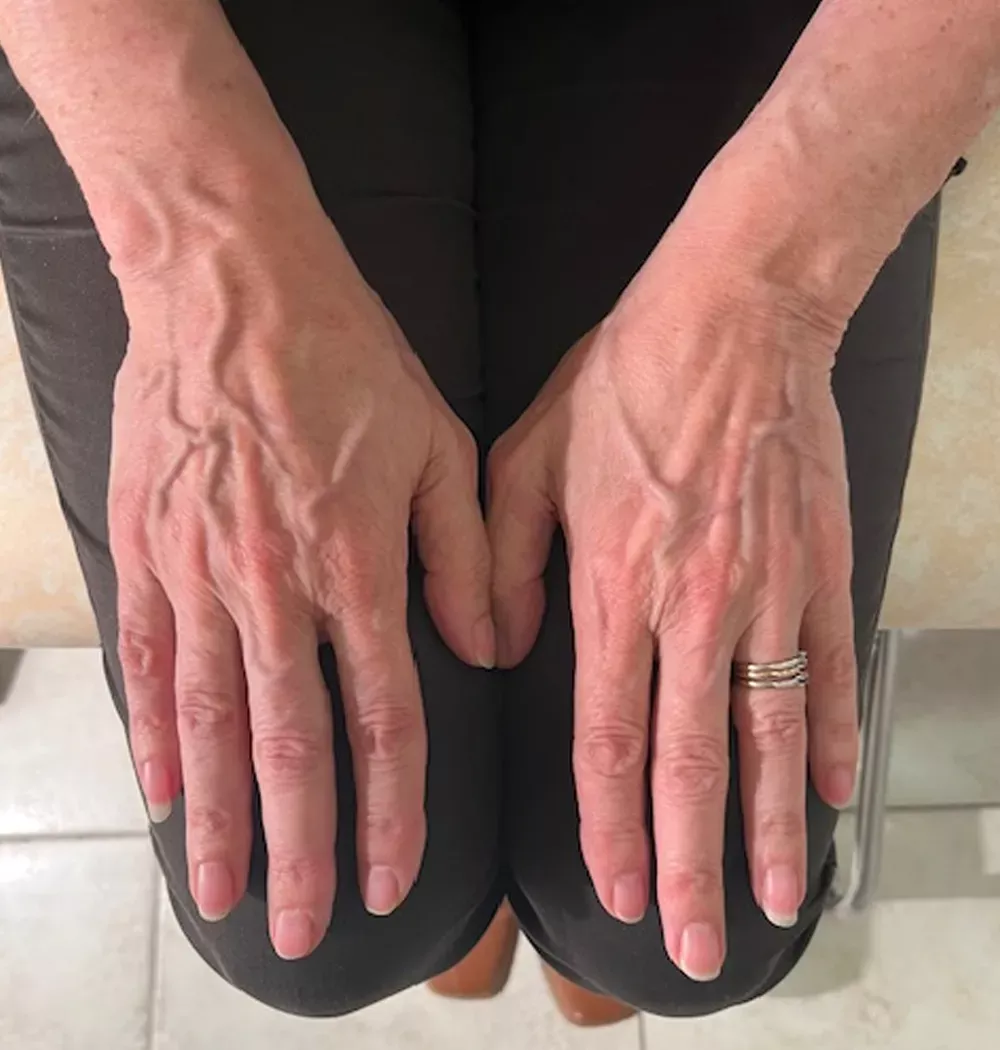
The veins in question here are veins located beneath the skin (subcutaneous), which are very prominent and appear mainly on the forehead, temples, scalp and around the eye sockets, but also on the hands, forearms and décolletage ; this list of areas is not exhaustive. They are swollen, much like varicose veins on the legs, with which they are, however, completely unrelated. Due to their location, they cause a cosmetic issue that is often distressing.
They are particularly noticeable in hot weather, during and after physical exertion, in certain body positions (head down, hands hanging down) or during certain facial expressions (more pronounced on the forehead when the person smiles, for example) ! They are less visible or not visible at all when it is cold. Purely psychological stress can cause them to spasm; purely physical stress promotes their swelling.
Whether the unsightliness is intermittent, almost permanent or variable, it tends to develop into a genuine complex over time.
From a health perspective, however, these veins - which have often been present for a long time - very rarely cause concern for those affected, as they do not lead to any complications. Their recurring, sometimes obsessive presence often leads them to consult various practitioners over time (dermatologists, vascular surgeons, plastic surgeons, GPs, etc.), whose opinions are generally uninformative or discouraging (‘I don’t know’, ‘live with it, you have to accept it’, ‘it’s not surgically feasible’, ‘it would be dangerous’, ‘I don’t know of any surgeons who treat this type of condition’, etc.) result in several years of medical uncertainty.
Other terms and synonyms
Prominent veins, raised veins, bulging veins, venous swelling, visible veins on the hands, large veins on the hands, bluish veins, large temporal veins, swollen veins on the temples, swollen veins on the forehead, periorbital veins.
What these veins are not
They function normally and perform their drainage role correctly, which sets them entirely apart from chronic venous insufficiency of the lower limbs and its complications. They are therefore never dangerous, never subject to spontaneous thrombosis and very rarely cause symptoms (occasional heaviness in the hands).
They are not spider veins
They must also be distinguished from superficial venous microvessels, which are red, blue or purple (spider veins, ‘rosacea’ on the cheekbones and nose, ‘erythrosis’ on the cheeks) and may also form patches; these are located exclusively within the skin and never beneath it.
They must not be confused with certain arteries
They must not be confused with certain sinuous arteries that resemble them but which must be strictly avoided, such as the superficial temporal artery at the temples or the superficial thoracic artery of the décolletage at the chest.
Why do these veins become visible ? (Causes)
The passage of time and the underlying skin condition are the main factors behind their formation.
These may include :
- Thin subcutaneous fatty tissue.
- A vascular wall that has lost its tone.
- And/or a reduction in the skin’s elastic and collagen fibres, causing it to sag.
- The appearance of a bluish tinge that makes them stand out more, especially if the skin is thin.
- Localised venous trauma.
- Regular intense exercise.
- A genetic predisposition that may lead to their appearance as early as adolescence
What treatments are available ?
Sclerotherapy = limited indications
The injection of a sclerosing agent is sometimes recommended to treat these unsightly veins, particularly on the hands. This is a lengthy treatment involving several stages (three sessions on average) carried out at intervals, requiring the wearing of a fairly tight bandage to support the effect of the agent for at least one week or more.
The veins are not always completely eliminated, and failure is common in the case of severely dilated veins. Recurrences due to repermeabilisation are possible.
These sclerotherapy procedures are extremely dangerous when performed on the face (which, in our view, should be a formal contraindication). The thinness of the skin in this area increases the risk of scarring and discolouration. Complications have been reported (skin, brain, nerve necrosis and even blindness). From what we have seen, they are never effective when performed (prolonged compression of the treated veins in this area is impossible, whereas it is essential with this method).
Lasers and other energy sources = unsuitable methods
Laser treatment is sometimes also offered. The results are disappointing and very limited, with a significant risk of skin burns, as the diameter of these swollen veins requires the delivery of a much greater amount of thermal energy than is needed for spider veins or fine non-protruding blue veins, for which laser treatment is the appropriate choice.
Filler techniques = temporary solutions
The effect of subcutaneous filling achieved by injecting hyaluronic acid (or fat harvested from the patient) into the hollows of the hand’s contours, to harmonise its shape and somewhat conceal prominent veins, does not address the root of the problem. The effect, which is often only partial, is merely temporary (6 months, rarely longer) and is no more satisfactory for this type of vein, even when combined with sclerotherapy.
On the other hand, thermal energy sources (laser, electrocoagulation, intense pulsed light), sometimes combined with the injection of sclerosing agents (especially away from the face), are the most appropriate treatment option for all purely cutaneous venous cosmetic conditions, as well as for very fine, non-protruding subcutaneous blue veins.
Microphlebectomy : the gold standard treatment
Principle and procedure
For unsightly, swollen veins located just beneath the skin – the condition we are discussing here – the most effective, quickest and most permanent treatment is the removal, in a single session, of the unsightly segments via microphlebectomy.
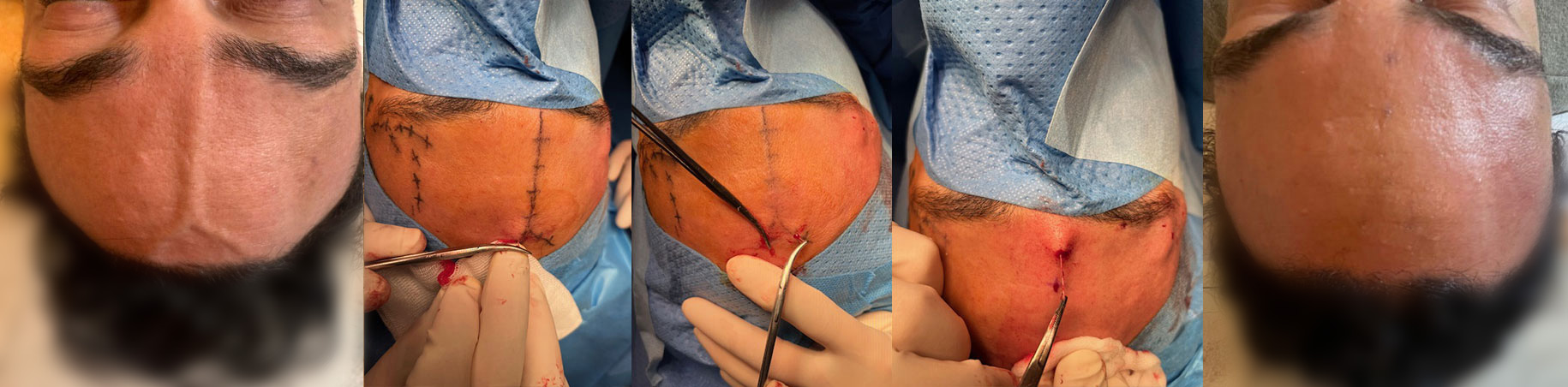
This technique involves making one or more millimetre-wide micro-incisions along the natural skin folds, which quickly become invisible. Using a small, specialised instrument and magnifying glasses, the affected vein is grasped and removed via subcutaneous extraction. The procedure is carried out on an outpatient basis, usually under local anaesthetic, and sometimes with light sedation.
Recovery is straightforward and the results are almost immediate. A bandage worn for a few hours to a maximum of 24 hours, depending on the area, is sufficient. Bruising is minimal or absent thanks to the application of cold compresses for a few minutes during the procedure to all the incisions in the treated area.
Specific areas : face, temples, hands, décolleté
A highly specialised procedure
It should be noted that microphlebectomy performed on the forehead, temples, scalp, hands or décolleté does not share the same characteristics as that carried out for varicose veins in the lower limbs :
- It is much finer, more delicate and sometimes complex due to the veins in these areas adhering very strongly to the deep layer of the skin (dermis), particularly on the temples, scalp, forehead and décolletage. It requires a specific technical approach and the use of suitable equipment.
- It requires a thorough understanding of the anatomy of the superficial venous networks, some of which must be preserved to maintain proper surface drainage, particularly in the hands and forearms, but also in the face.
- It requires certain technical precautions to avoid damaging the small sensory nerves that are often very close to these veins. Certain high-risk areas must be approached with great caution.
- It must take care to avoid the arteries present in the areas to be treated.
- The quality of the skin and the patient’s skin history are further factors to consider : those for example, who have suffered from severe acne and/or those who have undergone medical treatment for this, often from adolescence onwards, are at risk of atrophic scarring or slow healing on the face. Appropriate post-operative care tailored to each patient’s needs eliminates this risk.
The surgeon’s experience in this highly precise procedure is a key factor. Dr Philippe Gorny is one of the pioneers of this highly specialised vein surgery, which he has been performing for over 25 years. He has also developed a dedicated set of instruments for this procedure.
Results : short, medium and long term
Demand for treatments targeting veins on the hands and décolletage comes almost exclusively from women. The frequency of requests for treatments in other areas is roughly the same for both sexes.
Progress following the procedure
In the very short term, between the 3rd and 5th day, when the local swelling—which is usually very slight following this microsurgery—begins to subside, it is possible to gauge whether the procedure has been successful.
Follow-up and possible additional procedures
Between the 7th and 10th day, the final result becomes clearly apparent. It is confirmed after 4 to 6 weeks, depending on the location. The mini-incisions quickly become invisible. In approximately 15% of cases, if necessary, a minor additional procedure free of charge under local anaesthetic may be carried out in our medical office to ensure the complete satisfaction of the patient.
In the medium term, provided we strictly adhere to the guidelines we follow, we have never observed that removing unsightly, swollen but functional veins leads to the appearance of other veins of the same type in the treated area.
This can occur when only interruptions in the course of the unsightly veins have been made (rather than complete removal). A thorough anatomical understanding of the treated area is essential to avoid this side effect.
The appearance of new veins over time
In the long term (5 years or more), new, swollen and unsightly veins – linked to the patient’s age or constitution – may appear in areas other than those treated during the initial microphlebectomies. In our experience, we have encountered only a few cases where this has occurred, justifying a further surgical procedure.
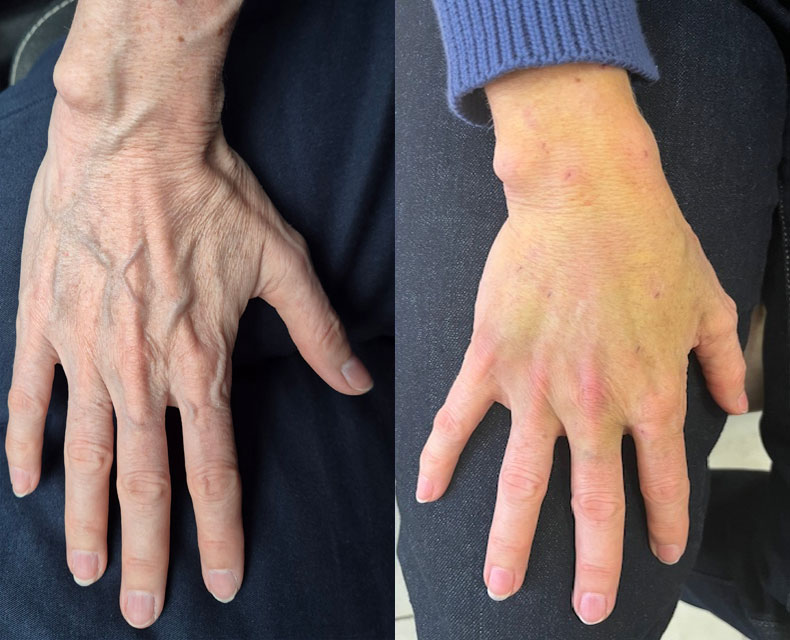
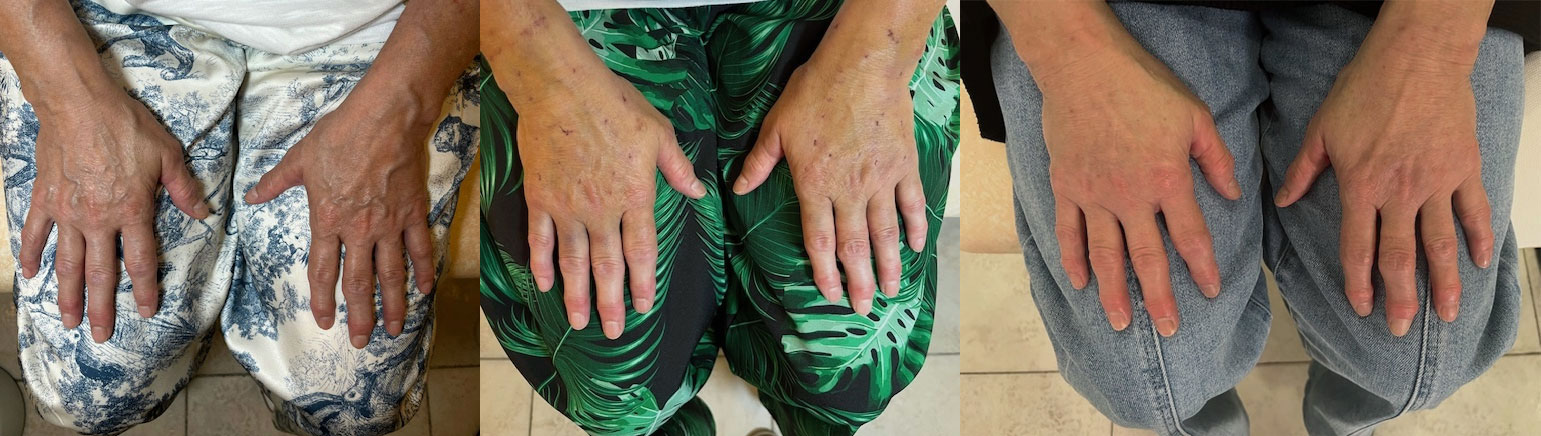
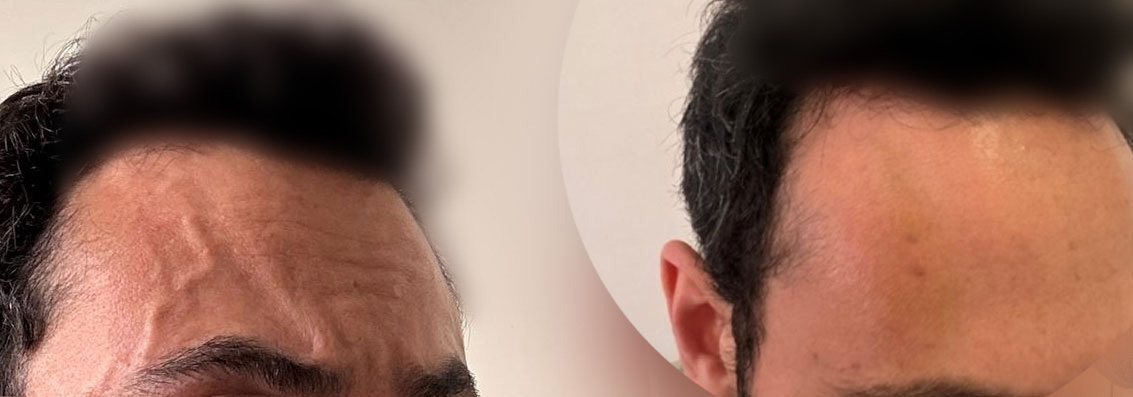
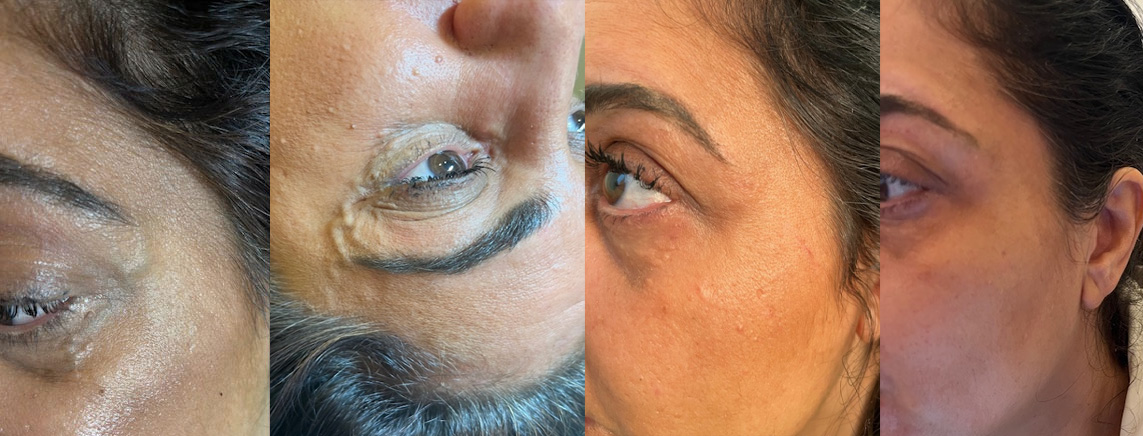
Before-and-after photos
The images shown here are for informational purposes only. They illustrate possible outcomes based on individual factors (age, skin quality, medical history, lifestyle, etc.).
Since each individual is unique and reacts differently, the results of each treatment may vary depending on numerous factors, making it impossible to guarantee a specific outcome.
Please note: these photographs do not constitute a guarantee of results or an incentive to undergo a surgical procedure.
A preliminary consultation with a healthcare professional is required to assess your eligibility before any surgical treatment.
No digital manipulation has been performed on these images other than possible cropping